Fiber Laser Cutting vs Plasma: Key Differences for Steel
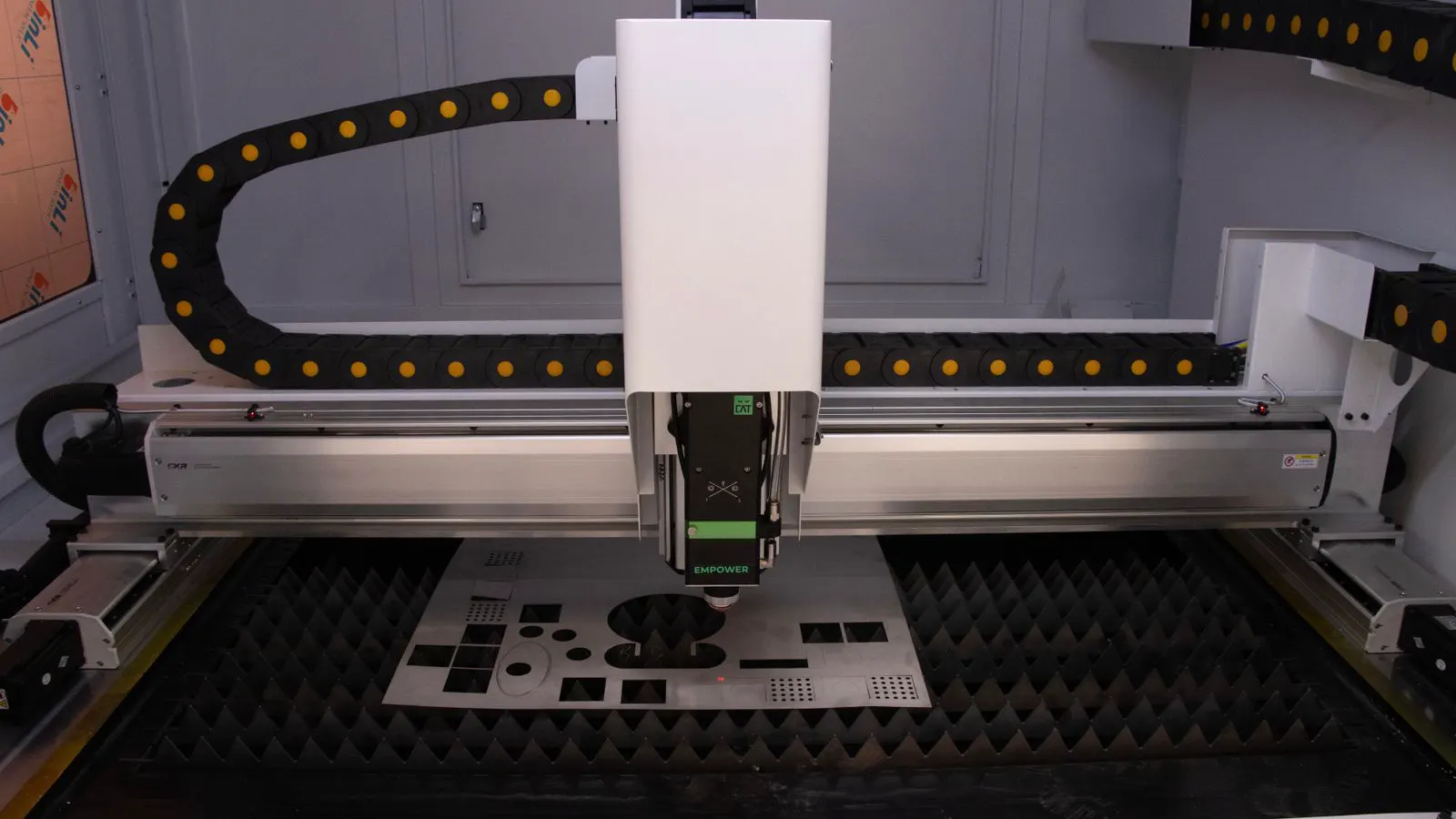
Fiber laser cutting delivers higher precision and cleaner edges than plasma cutting for steel. Plasma wins on cost for very thick plates. The choice depends on material thickness, tolerance needs, and production volume.
- Fiber laser cutting provides tighter tolerances and cleaner edges than plasma cutting for most steel thicknesses.
- Plasma cutting remains the lower-cost option for very thick steel or high-volume rough work.
- Edge quality and post-processing needs drive the total cost of ownership in both methods.
Which Method Delivers Better Accuracy on Steel
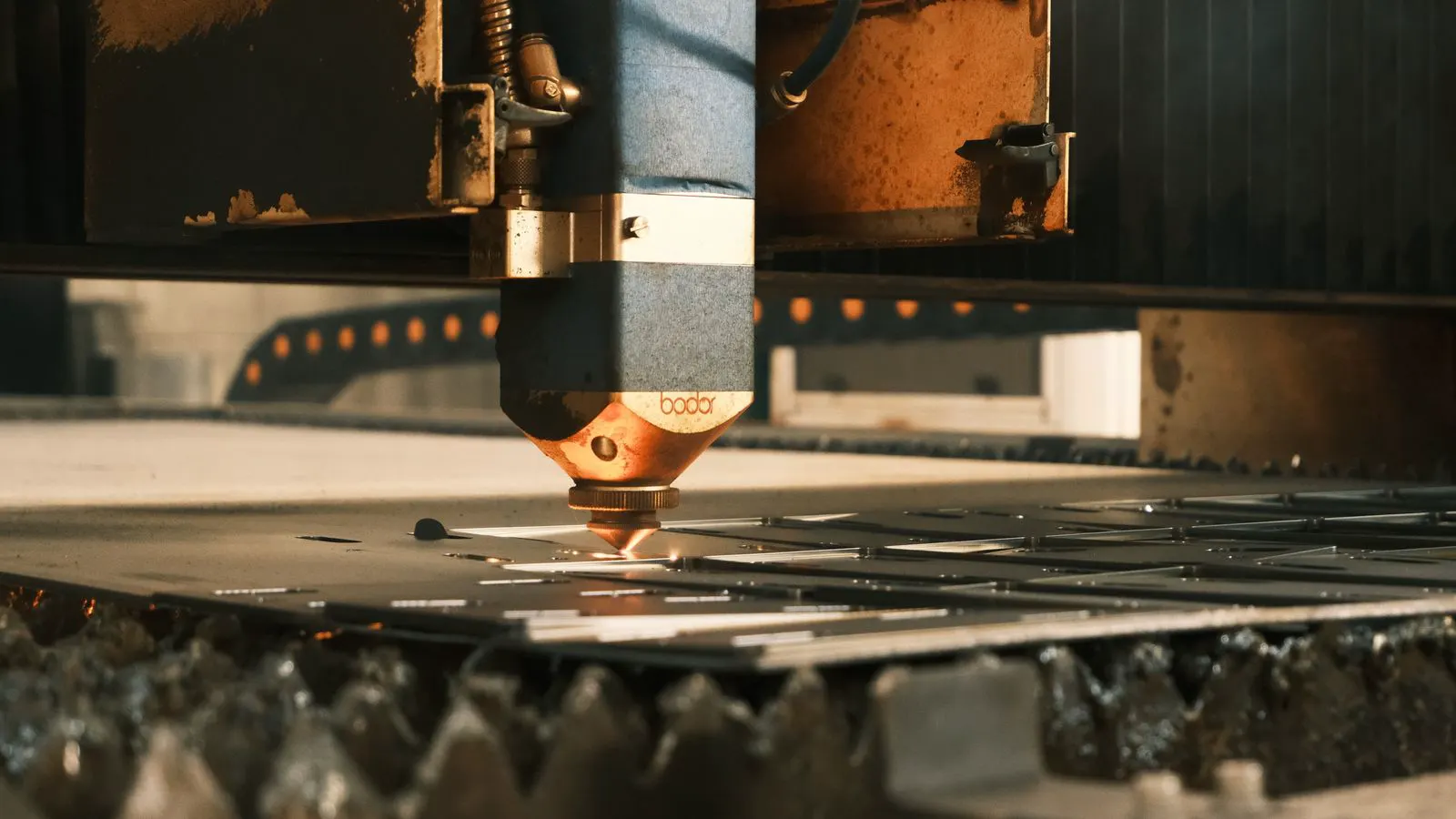
Accuracy in cutting depends on how tightly the energy source can follow a programmed path. A fiber laser head focuses a beam to a point smaller than a plasma arc. This allows the machine to follow tighter contours and hold closer to the programmed path. For a steel part that needs to fit into an assembly, that difference changes the outcome.
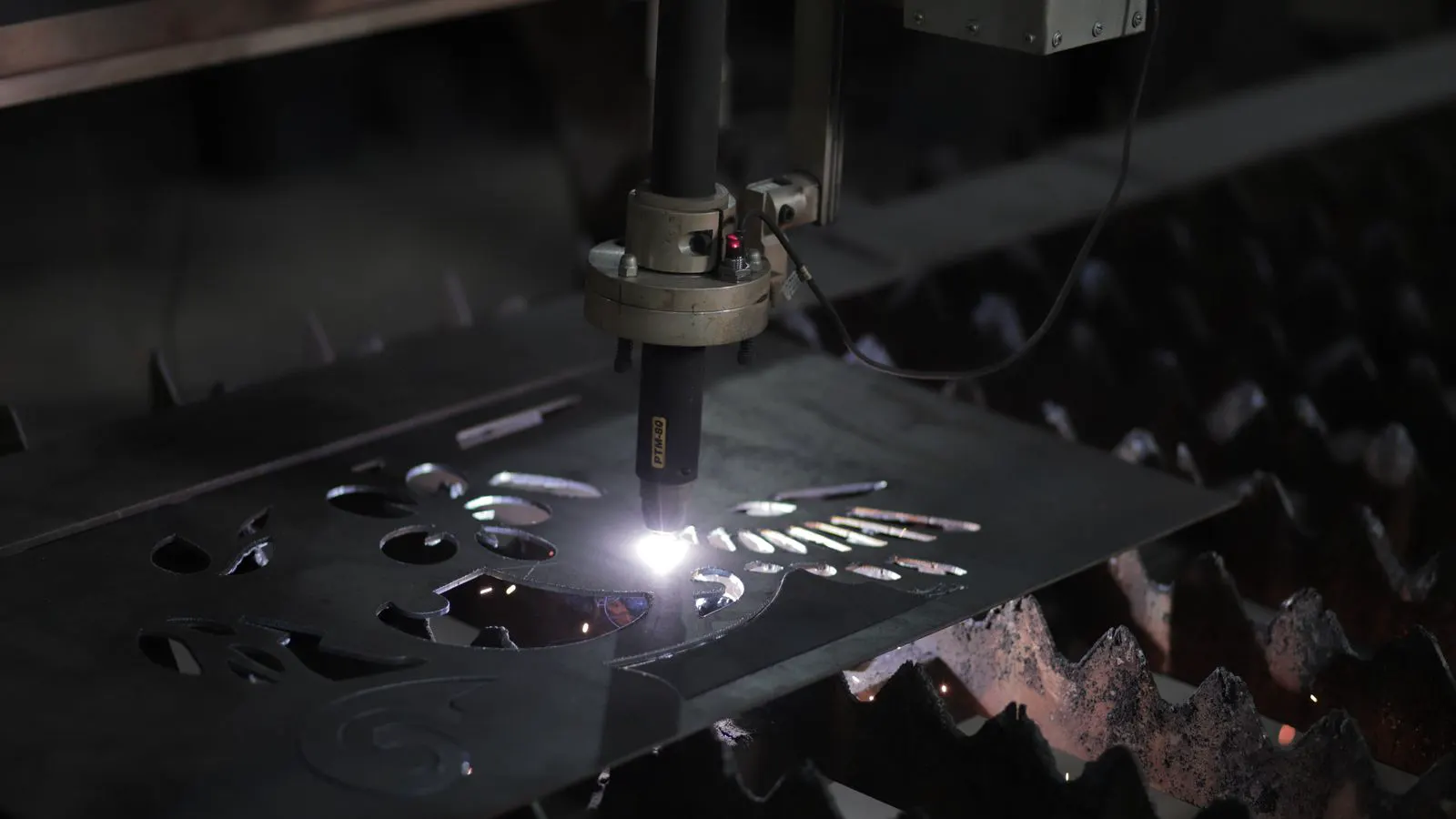
Plasma cutting uses an electric arc to melt the metal. The arc is wider than a laser spot. The kerf, or the width of the cut, is larger. The edge is not a clean line. It is a heat-affected zone with a melted and oxidized surface. Tolerances on plasma-cut parts are looser. Most shops set tolerances to account for this.
The practical test is simple. Cut the same part twice. Once with fiber laser, once with plasma. Compare the edge with a caliper and a magnifier. The fiber cut will show a narrower kerf and a straighter line. The plasma cut will show a wider kerf and a textured surface. For most steel work under a few inches thick, the fiber laser is the more accurate method.
Consider a steel bracket that mates with a bearing housing. If the hole is drilled by plasma, the operator must ream it to the exact diameter. The plasma cut leaves a burr and a heat-affected zone that can distort the hole shape. If the hole is cut by fiber, the reaming operation is minimal. The fiber cut holds the diameter closer to the drawing. For a part that goes into a functional assembly, this saves time and reduces the risk of fit issues.
How Edge Quality Changes Post-Processing
Edge quality is where the total cost of cutting changes. A plasma cut leaves a dross layer and a rough surface. Before a part is painted, welded, or assembled, someone must deburr it. Some edges need grinding. The dross must be removed. The heat-affected zone may need inspection.
A fiber laser cut produces a much cleaner edge. The kerf is narrow. The surface is smooth. Deburring is still needed in many cases, but the work is lighter. The edge is closer to the final shape. This reduces machine time and labor.
For a steel bracket with a flat face and a hole, the plasma cut may be fine. The operator can deburr quickly. For a gear tooth or a curved panel that will be painted, the plasma edge may not be acceptable without significant finishing. The fiber cut holds up better on the shop floor.
Look at the finish operation. If the part is to be powder coated, the rough edge of a plasma cut can cause adhesion issues. The coating may not adhere uniformly to the dross layer. The fiber cut, with its smoother surface, takes the coating better. This reduces the number of parts rejected at the quality check stage.
Cost Differences Between Fiber and Plasma
The upfront cost of a fiber laser is higher than a plasma table. The machine itself is more expensive. The operating cost per part is different. Plasma uses consumables, mainly the electrode and the nozzle. These are replaced often. The gas used is usually oxygen and air. The cost per hour of cutting is generally lower for plasma.
Fiber lasers consume less electricity per part than older laser types. The fiber source is efficient. The operating cost per hour is higher than plasma in some cases, but the labor saved on finishing can offset that. For thin and medium steel, the fiber laser often has a lower total cost because less finishing is required.
For very thick steel, the cost gap shifts. Plasma handles thick plate well. It is faster on heavy stock. The power required is high, but the machine is built for it. A fiber laser can cut thick steel, but it is slower. The cost per part rises with thickness. The plasma option becomes more attractive when the plate is thick and the finish requirement is low.
Consider the consumable cost over time. A plasma nozzle and electrode are inexpensive to buy but require frequent replacement. A fiber laser head requires maintenance, but the consumables are less frequent. The fiber laser also has a higher maintenance cost for the laser source itself. The total cost of ownership depends on the volume of work and the thickness of the material.
Thickness and Material Range
Steel thickness determines which method is practical. Plasma cutting is common from a few millimeters up to several inches. It works well on plate that is too thick for many fiber lasers to handle quickly. The arc can penetrate deep stock. The speed drops with thickness, but the process is still viable.
Fiber laser cutting is strong from thin sheet to medium plate. It is fast on thin steel. The speed increases as the material gets thicker, up to a point. Beyond that, the beam loses efficiency. The cost per part goes up. Many shops use fiber lasers for steel up to a certain thickness and switch to plasma for heavier work.
The material itself matters. Mild steel, stainless steel, and aluminum all react differently. Plasma works on all of them, but the gas and parameters change. Fiber lasers are efficient on all three. They handle non-ferrous metals well. On stainless, the edge quality of fiber is superior. The plasma edge on stainless is rougher and may need more cleaning.
Check the material grade. High-carbon steel may be harder to cut with plasma due to the higher melting point. Fiber lasers handle high-carbon steel with less difficulty. The beam penetrates the material more efficiently. This is a key factor for shops that work with a mix of steel grades.
When to Pick Fiber Laser Cutting
Pick fiber laser cutting when the part has tight tolerances. If the edge must be clean, choose fiber. If the part will be painted or anodized, the fiber cut is easier to finish. If the design has small features, like holes or sharp corners, fiber handles them better. Plasma can struggle with small details. The arc may melt the surrounding metal.
Fiber is also a good fit for mixed-material production. If a shop cuts steel, aluminum, and stainless on the same line, fiber is more flexible. The parameters change, but the machine does not. Plasma requires different gas and consumables for different materials. The changeover takes time.
For a custom shop that produces small batches of precision parts, fiber is the default. The quality justifies the cost. The customer expects a clean part. The fiber cut delivers that.
When to Pick Plasma Cutting
Pick plasma cutting when the plate is thick. If the steel is heavy and the finish is not critical, plasma is the lower-cost option. It is faster on thick stock. It handles rough cuts. It is used for structural work, where the part will be welded and the edge will be prepared anyway.
Plasma is also used for high-volume production of simple parts. If the part is a basic shape and the edge is not visible, plasma is efficient. The consumables are cheap. The machine is less expensive to buy and maintain. For a fabrication shop that produces brackets and frames in large quantities, plasma is a strong choice.
The decision is not about which method is better. It is about which method fits the part. The part defines the method.
Side-by-Side Comparison
| Option | Best for | Limitations |
|---|---|---|
| Fiber Laser Cutting | Thin to medium steel, tight tolerances, clean edges, mixed materials | Higher upfront cost, slower on very thick plate, edge quality drops on oxidized steel |
| Plasma Cutting | Very thick steel, rough cuts, high-volume simple parts, low budget | Loose tolerances, rough edges, dross and heat-affected zone, consumable costs |
| Hybrid Setup | Shops that need both precision and heavy plate capacity | Higher total capital, more maintenance, operator training for both systems |
The table shows the main trade-offs. A shop can use both. Many do. The fiber laser handles the precision work. The plasma handles the heavy plate. The hybrid setup covers both ends of the thickness range.
Final Selection Criteria
Check the material thickness first. If the steel is thin to medium, fiber is usually the better fit. If the steel is thick, plasma is often the better fit. Check the finish requirement. If the edge must be clean, choose fiber. If the edge will be prepared, plasma is acceptable.
Check the production volume. For small batches of complex parts, fiber is more efficient. For large batches of simple parts, plasma can be cheaper. Check the budget. Fiber has a higher entry cost. Plasma has a lower entry cost. The operating cost depends on the mix of parts.
The best method is not the most advanced one. It is the one that matches the part. Measure the tolerance. Look at the edge. Count the hours. The answer will be clear.
Frequently asked questions
Can plasma cutting match the accuracy of fiber laser cutting?
No. Plasma cutting has a wider arc and a larger kerf. It cannot hold the same tolerances as fiber laser cutting on most steel parts.
Is fiber laser cutting cheaper for thick steel?
Not usually. Plasma cutting is often more cost-effective for very thick steel because it is faster and uses less expensive consumables.
Does fiber laser cutting create heat-affected zones?
Yes, but they are much smaller than with plasma cutting. The narrow beam limits the heat-affected zone to a thin layer.
What is the main advantage of plasma cutting?
The main advantage is its ability to cut very thick steel at a lower cost than fiber laser cutting.
Can a shop use both methods?
Yes. Many shops run a hybrid setup. The fiber laser handles precision work, and the plasma handles heavy plate.