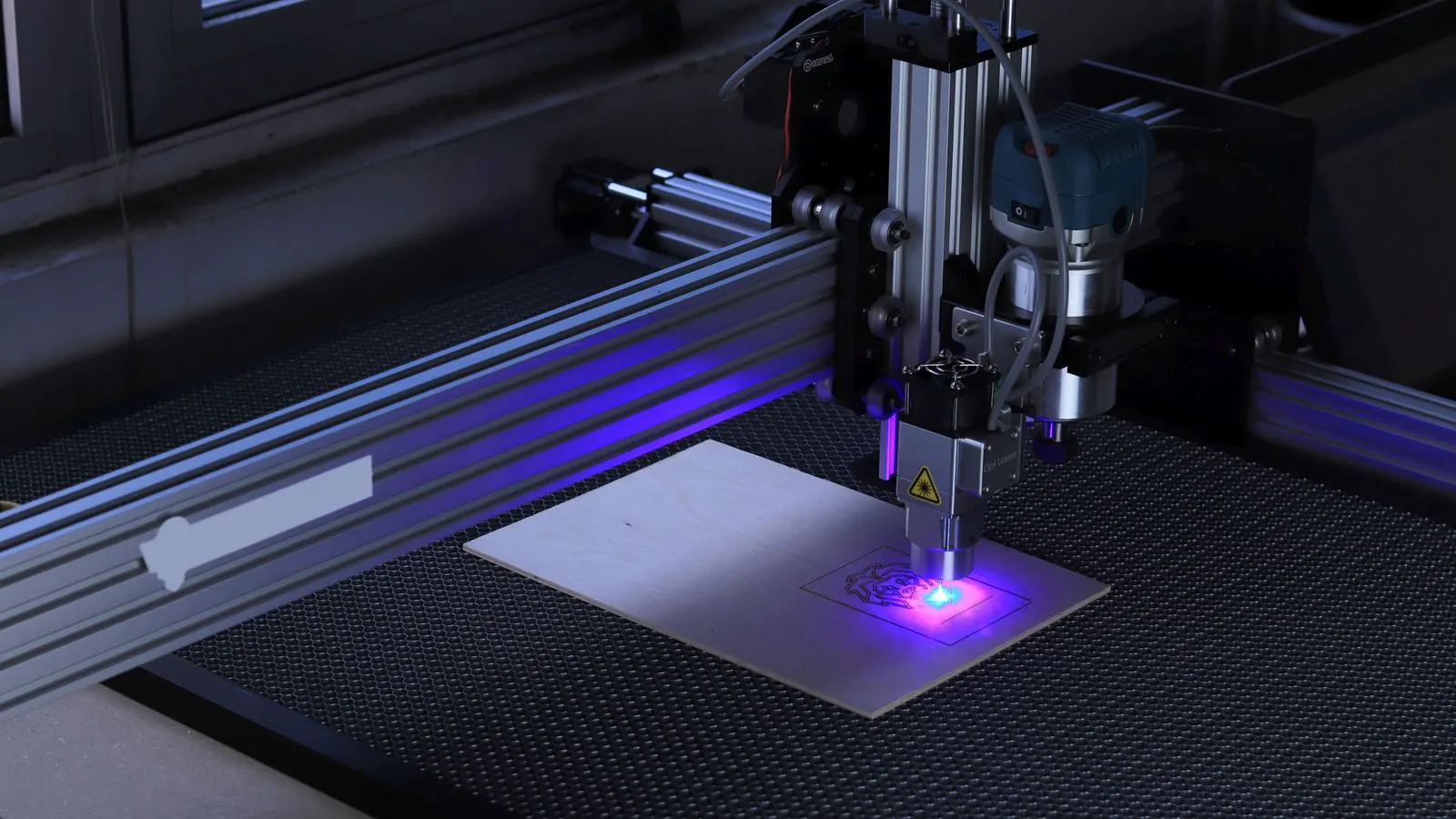
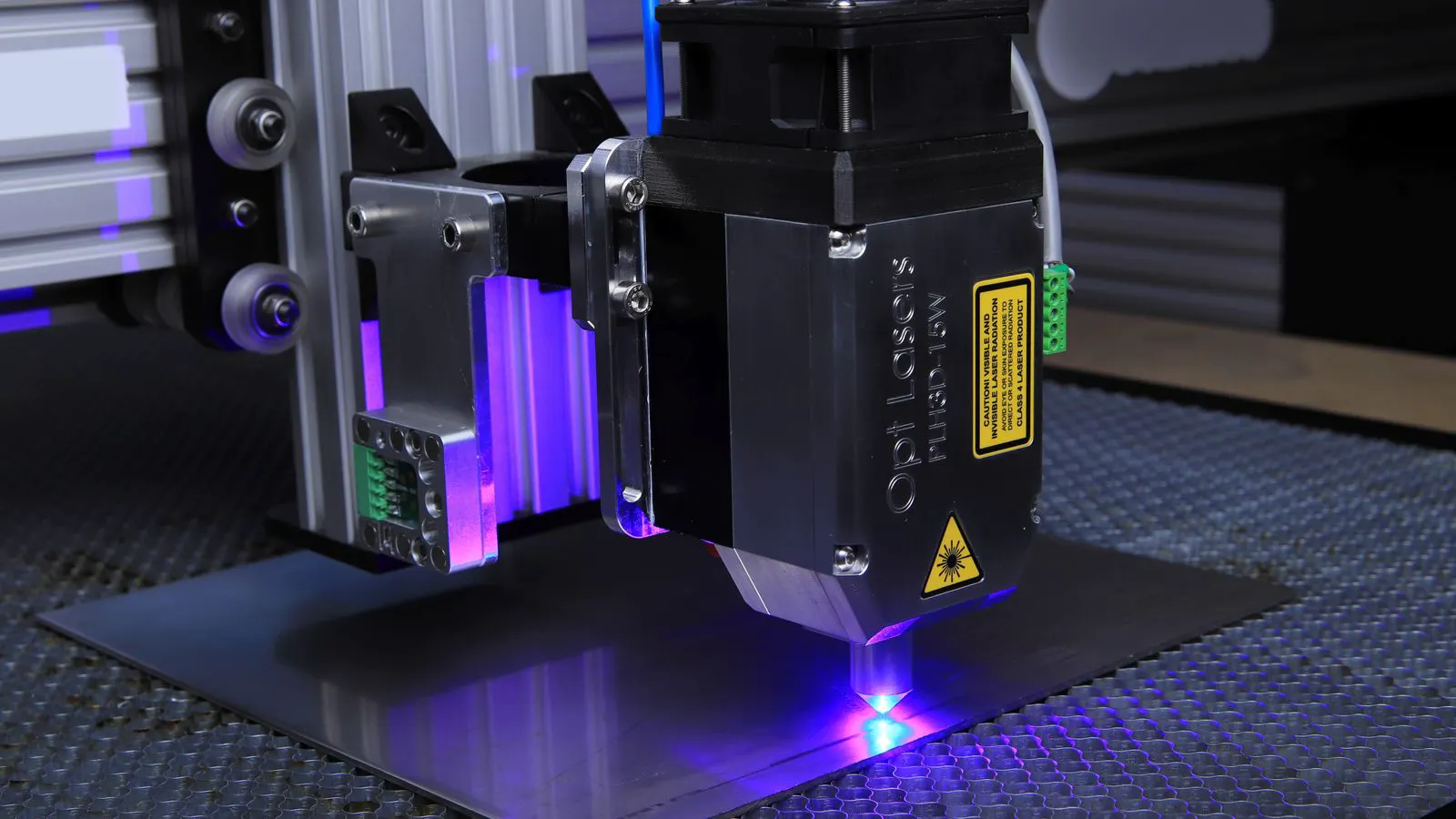
Comparison of Diode and Fiber Laser Marking Machines
Diode and fiber lasers serve different marking needs. Fiber lasers handle metal and high-speed production better, while diode lasers offer lower cost for plastics and general marking. The choice depends on material, mark quality, and production volume.
- Fiber lasers deliver higher speed and consistent mark quality on metals, making them the standard for high-volume production.
- Diode lasers cost less upfront and work well for marking plastics, rubber, and non-conductive materials.
- The choice between the two depends on the material being marked, required mark depth, and production speed.
- Fiber lasers are harder to tune for shallow, fine marks on certain plastics, while diode lasers may struggle with thick metal or high-speed lines.
- Buyers should match laser type to the dominant material and mark style in their operation, not to a single material type.
What changes when you swap diode for fiber in marking
The swap between diode and fiber marking changes three things immediately: speed, material capability, and mark quality on different surfaces. A diode laser marking machine sits at a lower cost point and performs well on plastics, rubber, and some metals. A fiber laser marking machine handles metals with higher energy density and faster cycle times, and it produces cleaner marks on stainless steel, aluminum, and anodized surfaces.
The decision is not about which laser is “better.” It is about which tool fits the material and mark type in your shop. A plant that marks injection-molded parts every shift needs a different setup than a fab shop etching serial numbers into stainless brackets at speed.
How the two sources differ in energy delivery
A diode laser source uses semiconductor diodes to generate light, then couples that light into optics for marking. The beam is typically in the infrared or visible range, depending on the configuration. A fiber laser source uses a doped glass fiber to amplify light, producing a tighter, more stable beam with less divergence.
The fiber beam carries more energy per pulse without generating as much heat in the optics. That stability matters when you are running a marking head for hours at a time. The diode beam needs more frequent alignment checks and can drift if the optics heat up during long shifts.
For marking, the fiber source also allows shorter pulse durations, which helps create sharp, clean marks. Diode sources can produce clean marks too, but the pulse width is generally wider, so the mark edges can be softer on some materials.
What this means for mark quality on metals
On stainless steel, fiber lasers produce deeper, sharper marks with less heat-affected zone. The beam energy hits the material more precisely, so you get a crisp etch without excessive discoloration. Diode lasers can mark stainless steel, but the marks are often shallower and may require multiple passes to reach the same depth.
On aluminum, the situation is more mixed. Fiber lasers handle aluminum well when the surface is bare or has a thin oxide layer. Anodized aluminum is trickier for both types. Diode lasers can mark anodized surfaces by burning through the dye and oxide, but the mark quality depends heavily on the anodize thickness and color. Fiber lasers can also mark anodized aluminum, but the result varies with the coating.
For painted or coated metals, both types can mark, but the mark is a removal of the coating rather than an etch into the base metal. The quality of the mark depends on the coating thickness and the laser pulse settings.
What this means for marking plastics and non-metals
Diode lasers have a stronger position for marking plastics and non-conductive materials. Many plastics absorb the diode wavelength well, so the mark burns into the material with clean edges. Rubber, wood, and some polymers respond well to diode marking.
Fiber lasers can mark some plastics, but not all. The fiber wavelength may not be absorbed well by the plastic, leading to weak marks or no mark at all. If you need to mark acrylic, polycarbonate, or ABS, check the absorption spectrum before buying. A diode source is often the safer choice for these materials.
For marking on glass, neither type works well in the same way. Specialized laser types are used for glass, and the choice between diode and fiber is less relevant unless the system is designed for glass marking.
Where the speed difference shows up in production
Fiber lasers mark faster. The pulse energy is higher, and the beam stability allows higher repeat rates without quality loss. A fiber marking head can process a part in a fraction of the time a diode head takes on the same part.
For a production line that marks a part every few seconds, the fiber source reduces cycle time and increases throughput. For a lab or a small job shop that marks a few hundred parts per day, the speed difference may not matter. The diode source can handle the volume without pushing the operator to work faster.
The speed advantage also affects mark consistency. A diode source may need longer dwell times to achieve the same mark depth, and that dwell time can cause more heat buildup in the part. On thin sheet metal, this heat can warp the part or create a larger heat-affected zone. Fiber lasers reduce dwell time, which keeps the part cooler.
A quick comparison of the two options
| Option | Best for | Limitations |
| Fiber laser marking machine | High-speed metal marking, stainless steel, aluminum, consistent mark quality on production lines | Higher upfront cost, less flexible for shallow marks on some plastics, requires careful setup for anodized surfaces |
| Diode laser marking machine | Marking plastics, rubber, wood, and general non-metal surfaces, lower-budget operations | Slower on metals, shallower marks on stainless steel, more sensitive to optics alignment and heat drift |
When to pick fiber over diode
Pick fiber when your marking workload is dominated by metals. If you are marking stainless steel brackets, aluminum housings, or coated steel parts at speed, the fiber source gives you the throughput and mark quality you need. It also holds up better on long production shifts because the beam stays stable.
Fiber is the right choice when mark depth and edge sharpness matter. For serial numbers, part numbers, or barcodes on metal, you want the mark to survive handling, cleaning, and wear. The fiber source gives you that durability.
If your operation includes a mix of metals and some plastics, fiber can still work, but you may need to adjust settings for each material. Some plastics will not accept a fiber mark well. In that case, a diode source may be the better fit, or you may need two machines.
When to pick diode over fiber
Pick diode when your marking workload is dominated by non-metals. If you are marking injection-molded plastic parts, rubber seals, wood, or other polymer products, the diode source gives you good mark quality at a lower cost.
Diode is the right choice when budget is tight and production volume is moderate. A small job shop or a startup that marks a few hundred parts per day can run a diode system without losing much in throughput.
If your parts are thin sheet metal and you need shallow, fine marks, diode can work, but you may need to tune the pulse settings carefully to avoid burning through the material. Fiber is easier to control on thin sheet because the shorter pulse reduces heat buildup.
What to check before you buy
Before you decide, list the top three materials you mark most often. If all three are metals, fiber is the default. If at least one is a plastic or non-metal, check the diode absorption on that material. A laser that does not mark a material well is a waste of money, no matter how fast it is.
Check the mark depth you need. For barcodes and QR codes, the mark needs to be deep enough to scan reliably. For cosmetic marks, a shallow mark may be enough. Fiber gives you more depth control, but diode can reach the same depth with more passes.
Check the part size and shape. Large parts need a marking head that can cover the area without excessive travel time. Fiber heads can cover large areas faster, but the cost difference is real. For small parts, the speed advantage is less noticeable.
Check the environment. If the machine runs in a hot shop with dust, the optics on a diode source may need more frequent cleaning and alignment. Fiber sources are more resistant to heat drift, which helps in harsher environments.
Check the integration. If the marking machine feeds into a robot or a conveyor, the cycle time matters. Fiber reduces cycle time, which can reduce the number of machines you need. If the marking is done manually, the cycle time difference is less important.
Common mistakes buyers make
The most common mistake is choosing a laser based on price alone. A cheap diode source may save money upfront, but if it marks your metal parts slowly and with poor quality, the cost in labor and rework can exceed the savings.
Another mistake is assuming a single laser type can handle every material. If you mark both stainless steel and acrylic, you need to test both sources on your exact materials. A mark that looks good in a demo on one material may fail on another.
A third mistake is ignoring mark depth. A shallow mark may look fine on a flat surface, but it can wear off on a part that gets handled, cleaned, or abraded. For parts that face wear, depth and edge quality matter more than speed.
A fourth mistake is not checking the optics and focus system. A cheap laser source with poor optics will give poor marks even if the source itself is good. The optics and focus system are part of the mark quality, not just an accessory.
Frequently asked questions
Which laser type gives a deeper mark on stainless steel?
Fiber lasers generally produce deeper marks on stainless steel with fewer passes. The higher pulse energy and shorter pulse duration allow the fiber source to etch deeper with less dwell time.
Can a diode laser mark aluminum?
Yes, a diode laser can mark bare aluminum, but the mark quality depends on the surface finish and the laser settings. Anodized aluminum is harder to mark, and the result varies with the anodize thickness and color.
Is a fiber laser marking machine always faster than a diode laser?
For metal marking, yes. Fiber lasers have higher pulse energy and better beam stability, which reduces cycle time. For some plastics, the speed difference is smaller or may not favor fiber if the material does not absorb the fiber wavelength well.
What is the main cost difference between diode and fiber marking?
Fiber marking machines have a higher upfront cost. Diode machines cost less, but the cost difference narrows when you factor in throughput, because fiber reduces cycle time and can process more parts per hour.
Should I buy a fiber laser if I mark mostly plastics?
Not necessarily. If your workload is mostly plastics, a diode laser is usually the better fit because many plastics absorb the diode wavelength well. Check the absorption spectrum for your specific plastic before deciding.